Fire-Roasted Hot Salsa

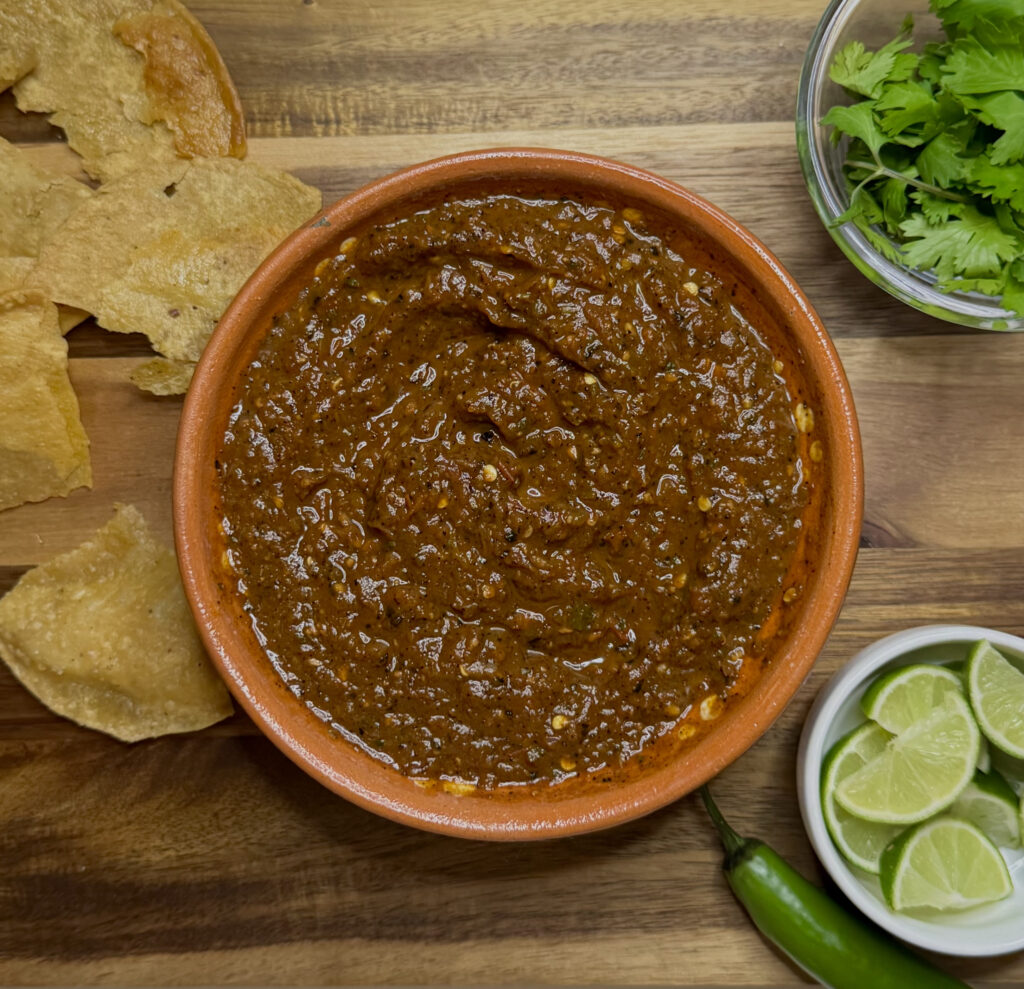
This Fire-Roasted Hot Salsa is smoky, spicy, and packed with bold roasted flavor. Made with organic Roma tomatoes, jalapeños, serranos, garlic, onion, cilantro, and fresh lime, this homemade salsa brings together the perfect balance of heat, brightness, and savory depth.
The vegetables are roasted until deeply browned and softened, bringing out their natural sweetness while adding that signature fire-roasted flavor. Ancho chile powder adds a mild, earthy warmth, while serranos, jalapeños, and cayenne bring the heat.
Serve this spicy homemade salsa with tortilla chips, tacos, quesadillas, nachos, burritos, or alongside your favorite Mexican-inspired meals. If you’re looking for a smoky and flavorful hot salsa made with fresh ingredients, this recipe is a must-try.
Why You’ll Love This Fire-Roasted Hot Salsa?
This Fire-Roasted Hot Salsa is simple to make but delivers bold flavor, making it perfect for snacking, entertaining, or adding something extra to your favorite meals.
- Smoky & Spicy – Charring the vegetables gives the salsa deep roasted flavor while serranos, jalapeños, and cayenne bring plenty of heat.
- Fresh & Flavorful – Fresh lime and cilantro brighten the roasted vegetables and balance the deeper smoky flavors.
- Made With Whole-Food Ingredients – This salsa is made primarily with fresh vegetables, herbs, spices, lime, and ghee.
- Adjustable Heat – You can easily customize the spice level by adjusting the serranos, jalapeños, and cayenne.
- Rich Roasted Flavor – Cooking the vegetables until deeply browned brings out their natural sweetness and creates a more complex salsa.
- Versatile – Enjoy it with tortilla chips or use it to add flavor to tacos, eggs, quesadillas, nachos, rice bowls, and more.
- Quick & Easy – With just a skillet and blender, you can have homemade fire-roasted salsa ready in about 15 minutes.
What’s in this Fire-Roasted Hot Salsa?
This Fire-Roasted Hot Salsa gets its bold flavor from fresh vegetables and peppers roasted until deeply browned, then blended with fresh lime, cilantro, and warming spices. Together, these ingredients provide a variety of vitamins, minerals, fiber, healthy fats, and naturally occurring plant compounds.
1. Organic Roma Tomatoes
Organic Roma tomatoes create the juicy, slightly sweet foundation of the salsa and become even more flavorful when fire-roasted. Tomatoes provide vitamin C, potassium, and lycopene, a naturally occurring carotenoid found in red and pink produce.
2. Organic White Onion
Organic white onion adds savory sweetness and depth as it chars alongside the other vegetables. Onions provide fiber and naturally occurring plant compounds, including quercetin.
3. Organic Garlic
Organic garlic adds savory depth and becomes mellow and slightly sweet when roasted. Garlic contains sulfur-containing compounds and other naturally occurring plant compounds that contribute to its nutritional value.
4. Organic Jalapeños
Organic jalapeños provide fresh pepper flavor and moderate heat to the salsa. They also provide vitamin C and capsaicin, the naturally occurring compound responsible for their characteristic heat.
5. Organic Serrano Peppers
Organic serrano peppers add a brighter, sharper heat that gives this salsa its spicy character. They provide vitamin C along with capsaicin and other naturally occurring plant compounds.
6. Organic Fresh Cilantro
Organic fresh cilantro adds a bright herbal flavor that balances the smoky roasted vegetables and spicy peppers. Fresh herbs can contribute small amounts of vitamins, minerals, and naturally occurring plant compounds.
7. Fresh Lime Juice
Fresh lime juice adds acidity and brightness that helps balance the richness, heat, and roasted flavors in the salsa. It also provides vitamin C.
8. Ancho Chile Powder
Ancho chile powder contributes mild heat along with a rich, earthy, slightly sweet chile flavor. Dried chile peppers contain naturally occurring plant compounds while adding depth and complexity to the salsa.
9. Cayenne Pepper
Cayenne adds concentrated heat, allowing you to increase the spiciness without significantly changing the salsa’s texture. It contains capsaicin, a naturally occurring compound found in hot peppers.
10. Chili Powder
Chili powder adds another layer of warmth and savory spice to the salsa. Depending on the blend, it can provide naturally occurring plant compounds from dried peppers and other spices.
11. Sea Salt
Sea salt enhances the natural flavors of the tomatoes, peppers, garlic, onion, lime, and spices. Sodium is an essential electrolyte involved in fluid balance, nerve signaling, and normal muscle function, although it is best consumed in moderation.
12. Ghee
Ghee helps the vegetables develop deeply browned, charred edges while adding subtle buttery richness. It is a concentrated cooking fat, so a small amount adds plenty of flavor during the roasting process.
13. Water
A small amount of water can be added if the salsa is too thick after blending. It helps adjust the consistency without significantly changing the flavor or nutritional profile.
Note: I use some organic ingredients, but it’s not required. You can learn more about organic produce and pesticide levels here. Feel free to use what works best for you!
Health Benefits of Fire-Roasted Hot Salsa
This Fire-Roasted Hot Salsa combines several colorful vegetables, fresh herbs, peppers, lime, and spices into one flavorful condiment. The ingredients contribute fiber, vitamins, minerals, and naturally occurring plant compounds while adding plenty of flavor to meals.
1. Rich in Colorful Plant Foods
Tomatoes, peppers, onion, garlic, cilantro, and lime each contribute different naturally occurring plant compounds. Eating a variety of colorful plant foods is a simple way to diversify the nutrients and beneficial compounds in your diet.
2. Supports a Fiber-Rich Diet
The tomatoes, peppers, onion, and garlic contribute dietary fiber. Fiber supports normal digestion and can help promote feelings of fullness when included as part of balanced meals.
3. Vitamin C
Tomatoes, jalapeños, serranos, and lime all contribute vitamin C. Vitamin C supports normal immune function, collagen production, and the absorption of iron from plant foods.
4. Lycopene From Tomatoes
The organic Roma tomatoes provide lycopene, a naturally occurring carotenoid concentrated in red produce. Tomatoes are one of the most common dietary sources of lycopene.
5. Naturally Spicy Plant Compounds
Jalapeños, serranos, and cayenne provide capsaicin, the naturally occurring compound responsible for their heat. These peppers also contribute vitamin C and other plant compounds.
6. Flavor From Simple Ingredients
Fresh vegetables, herbs, lime, and spices provide most of the flavor in this salsa. Using flavorful whole-food ingredients can make meals more enjoyable while helping you add variety without relying heavily on highly processed condiments.
Serving Suggestions
This Fire-Roasted Hot Salsa is incredibly versatile and can be served as a dip, topping, or flavorful addition to your favorite meals.
- Tortilla Chips – Serve with salted corn tortilla chips for an easy appetizer or snack. The smoky, spicy salsa pairs perfectly with the crunchy chips.
- Tacos – Spoon it over beef, chicken, shrimp, fish, or birria tacos for a bold burst of roasted chile flavor. The acidity from the lime helps balance richer taco fillings.
- Quesadillas – Serve alongside cheesy quesadillas for a fresh, spicy contrast to the melted cheese. The tomatoes and peppers also add extra vegetables to the meal.
- Breakfast Eggs – Spoon salsa over scrambled, fried, or poached eggs for a flavorful breakfast. The tomatoes and peppers add color, flavor, and nutrients without requiring a complicated preparation.
- Nachos – Drizzle or spoon the salsa over your favorite nachos after baking. Its smoky heat complements melted cheese, savory meats, and creamy toppings.
- Rice Bowls – Add a spoonful to a rice bowl with your favorite protein and vegetables. The salsa brings acidity and heat that can tie the entire meal together.
- Grilled Meats – Serve alongside grilled chicken, steak, or pork. The bright lime and roasted peppers provide a flavorful contrast to smoky, savory meats.
Storage Tips
Proper storage helps maintain the salsa’s fresh flavor and roasted character.
- Refrigeration: Transfer the salsa to an airtight container and refrigerate for up to 5 days. The flavor may actually become even more developed after resting overnight.
- Freezing: This salsa can be frozen, although the texture may become slightly softer after thawing. Freeze in a freezer-safe airtight container for up to 3 months, leaving a little room for expansion.
- Reheating: This salsa is best served cold or at room temperature, so reheating isn’t necessary. If you prefer it slightly warm, gently heat it in a saucepan over low heat just until warmed through.
Ingredient Substitutions & Variations
You can easily adjust this Fire-Roasted Hot Salsa depending on your preferred heat level and what ingredients you have available.
- Roma Tomatoes: Roma tomatoes work especially well because they’re meaty and relatively low in moisture, but other ripe tomatoes can be substituted.
- Jalapeños: Reduce the amount for a milder salsa or add another jalapeño for more heat. Removing the seeds and membranes can also mellow the heat somewhat.
- Serrano Peppers: Serranos provide a sharper, more intense heat. Use fewer for a milder salsa or add an extra pepper if you want it hotter.
- Ancho Chile Powder: Ancho chile powder gives the salsa earthy, slightly sweet chile flavor. If you don’t have it, you can use additional chili powder, although the flavor will be slightly different.
- Cayenne Pepper: Adjust the cayenne to control the overall heat. Start with less and add more after blending.
- Ghee: Ghee adds a subtle buttery richness while helping the vegetables char. You can substitute another cooking fat if needed.
- Cilantro: If you’re not a fan of cilantro, simply leave it out or replace it with a small amount of fresh parsley for a different herbal note.
- Lime Juice: Fresh lime juice is best, but lemon juice can be used in a pinch. It will provide a slightly different acidity and flavor.
- Water: Only add water if the salsa is thicker than you’d like. Add it gradually so you don’t accidentally dilute the flavor.
Common Mistakes to Avoid
A few simple techniques will make a noticeable difference in the flavor and texture of your Fire-Roasted Hot Salsa.
- Not Charring the Vegetables Enough: Don’t be afraid to let the vegetables develop dark roasted spots. This browning is what gives the salsa its signature fire-roasted flavor.
- Burning the Garlic: Garlic can go from beautifully browned to burnt quickly. Keep an eye on it and remove the cloves from the skillet earlier if they’re becoming too dark.
- Overcrowding the Skillet: Give the vegetables enough room to make contact with the hot pan. Overcrowding can cause them to steam instead of developing those flavorful charred spots.
- Over-Blending: Don’t completely puree the salsa. A few pulses in the blender or food processor will give you a more rustic texture that’s especially good for scooping with tortilla chips.
- Adding Too Much Water: Start with no water and only add it if necessary. Adding too much can dilute the roasted tomato and chile flavor.
- Not Tasting Before Serving: Peppers can vary significantly in heat. Taste the finished salsa and adjust the salt, lime juice, or cayenne before serving.
- Serving Immediately: Let the salsa rest for about 15–20 minutes before serving. This gives the roasted vegetables, spices, lime, and peppers time to come together.
Frequently Asked Questions (FAQ)
How spicy is this Fire-Roasted Hot Salsa?
With two jalapeños, two serranos, and ½ teaspoon of cayenne, this salsa has a noticeable kick while still being enjoyable with tortilla chips. You can easily adjust the heat by reducing or increasing the peppers and cayenne.
Can I make this salsa less spicy?
Yes. Start by using fewer serranos and jalapeños and reduce or omit the cayenne. You can also remove the seeds and membranes from the peppers for a milder version.
Do I need a cast-iron skillet?
No. A heavy-bottomed skillet will work as well. Cast iron is particularly useful because it holds high heat well and helps the vegetables develop those deeply browned spots.
Should I peel the tomatoes after roasting?
No. The tomato skins can stay on and will blend into the salsa. The charred skin also contributes to the roasted flavor.
Can I make this salsa in a food processor?
Absolutely. A food processor works well, especially if you prefer a chunkier salsa. Pulse rather than continuously blending to avoid making the salsa completely smooth.
Why does my salsa taste bitter?
The most common cause is burning the garlic, peppers, or other vegetables. Deeply charred is desirable, but if an ingredient becomes completely black and bitter, remove it before blending.
Can I make this salsa ahead of time?
Yes. In fact, making it a little ahead can improve the flavor. Letting it rest allows the roasted vegetables, peppers, spices, and lime to meld together.
How can I make the salsa even hotter?
For a seriously spicy version, use three serranos, two jalapeños, and up to one teaspoon of cayenne. Add the cayenne gradually and taste as you go so you can control the final heat.
What makes this salsa fire-roasted?
The vegetables are cooked directly in a very hot skillet until they develop deeply browned and charred spots. This high-heat cooking method brings out their natural sweetness and creates the smoky, roasted flavor that sets this salsa apart.
Fire-Roasted Hot Salsa
Ingredients
- 6 organic Roma tomatoes halved
- ½ medium organic white onion cut into large chunks
- 4 organic garlic cloves peeled
- 2 organic jalapeños
- 2 organic serrano peppers
- 1–2 tablespoons fresh organic cilantro
- 1 tablespoon fresh lime juice
- 1 teaspoon ancho chile powder
- ½ teaspoon cayenne pepper
- ½ teaspoon chili powder
- ½ teaspoon sea salt plus more to taste
- 1 tablespoon ghee
- 1–2 tablespoons water only if needed
Instructions
- Heat the ghee in a large cast-iron skillet or heavy-bottomed pan over high heat. Add the tomatoes, onion, jalapeños, serranos, and garlic, making sure not to overcrowd the pan.
- Cook for about 8–12 minutes, turning occasionally, until the tomatoes are softened and the vegetables develop plenty of dark, charred spots.
- Keep an eye on the garlic, as it can brown quickly. If it begins getting too dark, remove it from the skillet before the other vegetables are finished.
- Transfer the roasted vegetables to a blender or food processor. Add the cilantro, lime juice, ancho chile powder, cayenne, chili powder, sea salt, and ghee from the skillet.
- Blend until combined, being careful not to completely puree the salsa.
- Pulse until the salsa reaches your preferred texture, leaving some texture for scooping with tortilla chips.
- Taste and adjust with additional sea salt, lime juice, or cayenne as desired. If the salsa is too thick, add water 1 tablespoon at a time.
- Transfer the salsa to a bowl and let it rest for about 15–20 minutes before serving. This gives the roasted vegetables, peppers, spices, and lime time to meld together.
- Serve with tortilla chips or alongside tacos, quesadillas, nachos, eggs, and your favorite Mexican-inspired dishes.