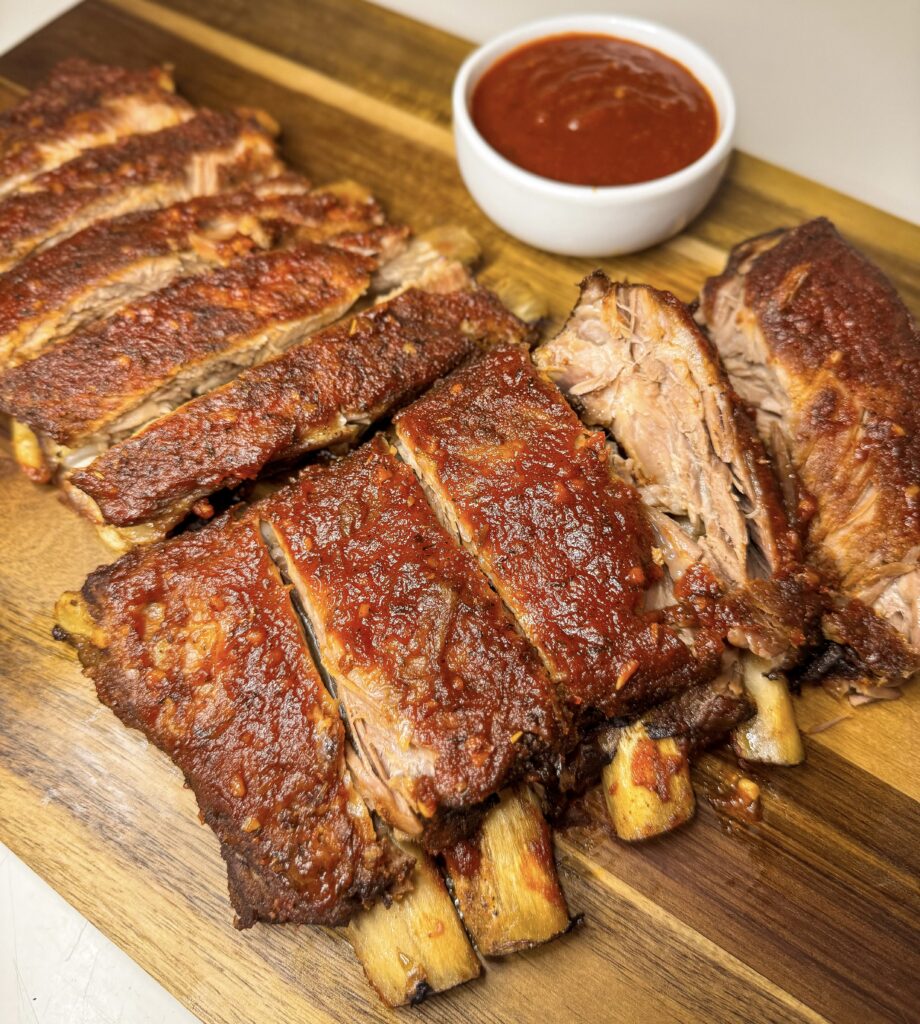
St. Louis BBQ Ribs with Sweet Herb Garlic Glaze

These St. Louis BBQ ribs are tender, slow-baked pork ribs seasoned overnight with a flavorful homemade dry rub, then finished with a sweet herb garlic glaze. The ribs are baked low and slow until tender before being coated in layers of rich homemade BBQ sauce and finished with a beautiful caramelized coating.
The homemade glaze is what makes these ribs stand out. Tomato sauce and tomato paste create a rich base, while honey adds sweetness, apple cider vinegar brings a little tang, and ghee or butter adds richness. Fresh garlic, smoked paprika, thyme, oregano, and rosemary bring a savory herb flavor that balances the sweetness and gives the ribs their signature finish.
These oven-baked St. Louis-style ribs are perfect for Sunday dinners, summer cookouts, holidays, or anytime you’re craving tender BBQ ribs without relying on bottled sauce. If you’re looking for St. Louis BBQ ribs with a homemade sweet and savory glaze, this recipe is a must-try.
Why You’ll Love these St. Louis BBQ Ribs?
These St. Louis BBQ ribs combine tender slow-baked pork with a homemade glaze that’s sweet, smoky, garlicky, savory, and full of aromatic herbs.
• Tender & Juicy – Baking the ribs low and slow in tightly sealed foil helps retain moisture while giving the connective tissue time to soften.
• Sweet & Savory – Honey adds sweetness while garlic, Worcestershire sauce, smoked paprika, and herbs create a rich savory balance.
• Herb-Filled Flavor – Thyme, oregano, and rosemary give the BBQ glaze an aromatic flavor that sets these ribs apart from a traditional sweet BBQ sauce.
• Homemade BBQ Glaze – The sauce is made from simple ingredients like tomato sauce, honey, garlic, herbs, and spices, giving you a flavorful homemade alternative to bottled BBQ sauce.
• Beautifully Caramelized – Brushing the glaze on in layers and finishing the ribs at a higher temperature creates a sticky, glossy, caramelized coating.
What’s in these St. Louis BBQ Ribs?
The ingredients come together to create tender St. Louis BBQ ribs and a homemade BBQ glaze that’s balanced between sweet, smoky, savory, tangy, and herbaceous flavors. Along with building flavor, the tomatoes, garlic, herbs, and spices provide naturally occurring vitamins, minerals, and antioxidant plant compounds.
1. St. Louis-Style Pork Ribs
St. Louis-style pork ribs are meaty ribs that become tender and flavorful when cooked slowly at a low temperature. Pork provides high-quality protein along with nutrients such as thiamine, which helps the body convert food into usable energy and supports normal nervous-system function.
2. Smoked Paprika
Smoked paprika gives the dry rub and BBQ glaze a deep smoky flavor with mild sweetness. It also provides carotenoid compounds, including vitamin A precursors, which support normal vision, immune function, and healthy skin.
3. Garlic Powder
Garlic powder adds savory garlic flavor to the dry rub and helps distribute the seasoning evenly across the ribs. Garlic contains sulfur-containing compounds that give it its characteristic flavor and have been studied for their potential role in supporting cardiovascular health.
4. Onion Powder
Onion powder adds savory depth and subtle sweetness to the dry rub and glaze. Onions contain antioxidant compounds such as quercetin, which helps protect cells from oxidative stress.
5. Brown Sugar
Brown sugar adds a small amount of sweetness to the dry rub and helps encourage browning on the ribs. Because it is an added sugar, it is best enjoyed in moderation, but the small amount here helps balance the smoky and savory seasonings.
6. Sea Salt
Sea salt enhances the natural flavor of the pork while bringing out the flavors of the herbs and spices. Sodium is an essential electrolyte involved in fluid balance, nerve signaling, and normal muscle function, although it is important to consume it in moderation.
7. Black Pepper
Black pepper adds mild heat and earthy flavor to the dry rub and BBQ glaze. It contains piperine, a naturally occurring compound responsible for its peppery flavor that has also been studied for antioxidant properties.
8. Ground Cumin
Ground cumin adds warm, earthy depth to the dry rub without overpowering the other spices. Cumin also provides small amounts of minerals such as iron along with naturally occurring plant compounds.
9. Dried Oregano
Dried oregano brings a fragrant herbal flavor to both the rub and glaze. Oregano contains antioxidant plant compounds such as thymol and carvacrol, which help protect cells from oxidative stress.
10. Mustard Powder
Mustard powder adds a subtle tangy flavor and extra depth to the dry rub. Mustard seeds contain naturally occurring glucosinolates, plant compounds that have been studied for their antioxidant activity.
11. Organic Tomato Sauce
Organic tomato sauce creates the flavorful base of the homemade BBQ glaze while adding moisture and natural acidity. Tomatoes are rich in lycopene, an antioxidant carotenoid that helps protect cells from oxidative stress and becomes more available to the body when tomatoes are cooked.
12. Organic Honey
Organic honey gives the glaze its signature sweetness and helps create the glossy caramelized coating on the ribs. Honey contains small amounts of naturally occurring antioxidant plant compounds, although it is still an added sugar and is best enjoyed in moderation.
13. Apple Cider Vinegar
Apple cider vinegar adds acidity that balances the sweetness of the honey and richness of the ribs. Vinegar may also slow the digestion of carbohydrate-containing foods somewhat, which can contribute to a more gradual blood-glucose response when consumed as part of a meal.
14. Organic Tomato Paste
Organic tomato paste intensifies the tomato flavor and helps the BBQ glaze become thicker and richer. Because it is concentrated tomato, it also contributes lycopene and other antioxidant compounds that help protect cells from oxidative stress.
15. Ghee or Unsalted Butter
Ghee or unsalted butter gives the glaze a rich, smooth texture and adds depth to the sauce. Dietary fat provides energy and helps the body absorb fat-soluble nutrients from foods eaten
16. Garlic
Fresh garlic gives the glaze a bold, aromatic garlic flavor that complements the herbs and smoky spices. Garlic contains sulfur compounds such as allicin, which have been studied for their potential antioxidant and cardiovascular benefits.
17. Worcestershire Sauce
Worcestershire sauce adds savory, salty, tangy umami flavor that makes the homemade BBQ glaze taste more complex. Because it is concentrated, a small amount provides substantial flavor, although it also contributes sodium to the recipe.
18. Dried Thyme
Dried thyme adds an earthy, aromatic herbal flavor that pairs especially well with garlic and pork. Thyme contains naturally occurring aromatic compounds with antioxidant properties that help protect cells from oxidative stress.
19. Dried Rosemary
Dried rosemary gives the BBQ glaze a fragrant, woodsy herbal note that rounds out the sweeter ingredients. Rosemary contains plant compounds such as rosmarinic acid and carnosic acid, which have antioxidant properties.
20. Water
Water can be added to the glaze as needed to thin it to the right consistency. It helps prevent the sauce from becoming overly thick while simmering and makes it easier to brush evenly over the ribs.
Note: I use some organic ingredients, but it’s not required. You can learn more about organic produce and pesticide levels here. Feel free to use what works best for you!
Health Benefits of St. Louis BBQ Ribs
Although these St. Louis BBQ ribs are a comforting, indulgent-style meal, they also provide protein and a variety of nutrients and plant compounds from the pork, tomatoes, garlic, herbs, and spices.
1. Supports Muscle & Tissue Maintenance
Pork ribs provide complete protein containing all of the essential amino acids the body needs to build and maintain tissues. Protein also contributes to muscle maintenance and can help make a meal more satisfying.
2. Provides Antioxidant-Rich Plant Compounds
Tomatoes, garlic, oregano, thyme, rosemary, paprika, and black pepper contribute a variety of antioxidant plant compounds. These compounds help the body manage oxidative stress and protect cells from damage caused by free radicals.
3. Supports Energy Metabolism
Pork provides several B vitamins, including thiamine, which plays an important role in converting carbohydrates, fats, and proteins into usable energy. Adequate B-vitamin intake supports normal cellular metabolism and nervous-system function.
4. Provides Dietary Fat
Ghee or butter contributes dietary fat, which provides energy and helps the body absorb fat-soluble nutrients. Fat also adds richness and helps make the meal more satisfying.
5. Supports Normal Vision & Immune Function
Tomatoes and smoked paprika provide carotenoid compounds, including beta-carotene and lycopene. Beta-carotene can be converted into vitamin A, which supports normal vision, immune function, and healthy skin.
Serving Suggestions
These St. Louis BBQ ribs pair especially well with cool, creamy, fresh, or roasted sides that balance their rich BBQ flavor.
• Creamy Elote Slaw – The cool, creamy texture and fresh vegetables provide a refreshing contrast to the warm, sticky ribs. The vegetables also add fiber, vitamins, and minerals to the meal.
• Roasted Potatoes – Crispy roasted potatoes are perfect for soaking up the extra BBQ glaze. Potatoes provide carbohydrates for energy along with potassium, an important electrolyte involved in normal muscle and nerve function.
• Buttered Corn on the Cob – Sweet corn complements the sweetness of the BBQ glaze while adding a fresh, summery flavor. It also contributes carbohydrates and fiber to make the meal more filling.
• Simple Green Salad – A crisp salad with a bright vinaigrette helps balance the richness of the pork and glaze. Fresh vegetables add fiber and a variety of vitamins and minerals.
Storage Tips
Store leftover St. Louis BBQ ribs and extra glaze properly to maintain their flavor and texture.
• Refrigeration: Store leftover ribs in an airtight container in the refrigerator for 3–4 days. Keep extra glaze refrigerated separately in a covered container.
• Freezing: Freeze cooked ribs in an airtight freezer-safe container or tightly wrapped portions for up to 2–3 months for best quality. Thaw overnight in the refrigerator before reheating.
• Reheating: Cover the ribs and warm them in a 300°F oven until heated through. Add some reserved glaze before or during reheating to help keep the meat moist.
Ingredient Substitutions & Variations
You can make a few simple substitutions depending on what you have available.
• Ghee: Use unsalted butter if you don’t have ghee. Both add richness and help create a smooth BBQ glaze.
• Honey: Maple syrup can replace honey for a slightly different flavor while still providing sweetness.
• Apple Cider Vinegar: White wine vinegar can be substituted for a similar tangy balance.
• Fresh Herbs: Fresh thyme, oregano, or rosemary can replace dried herbs. Use more fresh herbs because dried herbs have a more concentrated flavor.
• St. Louis-Style Ribs: Baby back ribs can be used instead, but they are smaller and may require less cooking time.
• Mustard Powder: The mustard powder can be left out if you prefer a simpler dry rub. The ribs will still have plenty of flavor from the remaining spices.
Common Mistakes to Avoid
These small details will help you get the most tender St. Louis BBQ ribs and best caramelized glaze.
• Skipping the Overnight Seasoning: Giving the dry rub 8–24 hours to sit allows the seasoning to develop deeper flavor throughout the meat.
• Leaving the Membrane Attached: The membrane on the bone side can remain tough after cooking. Removing it helps improve the texture and allows the seasoning to better contact the meat.
• Opening the Foil Too Often: Keeping the ribs tightly sealed helps maintain a moist cooking environment. Try not to open the packets repeatedly while the ribs bake.
• Using All the Glaze at Once: Apply the glaze in layers instead of using it all at once. This creates a thicker, more caramelized coating while leaving extra sauce for serving.
• Burning the Glaze: Honey caramelizes quickly under high heat. Watch the ribs closely during broiling and keep the broiling time to about 1–2 minutes.
• Skipping the Rest: Allowing the ribs to rest for 5–10 minutes before slicing gives the juices time to redistribute and makes the ribs easier to cut.
Frequently Asked Questions (FAQ)
Here are some common questions about making these St. Louis BBQ ribs.
Can I make these ribs without a smoker?
Yes. These ribs are made entirely in the oven, so you don’t need a smoker or grill to get tender, flavorful ribs.
Can I make the BBQ glaze ahead of time?
Yes. Prepare the glaze ahead of time, allow it to cool, and refrigerate it in a covered container. Reheat it gently before brushing it onto the ribs.
How do I know when the ribs are done?
The ribs should be very tender, and a toothpick should slide between the bones with little resistance. If they are still tough after 3 hours, continue baking in 20–30-minute increments.
Can I use baby back ribs instead of St. Louis ribs?
Yes. Baby back ribs can be substituted, but they are smaller and leaner, so they may cook faster than St. Louis-style ribs.
Can I grill the ribs instead of finishing them in the oven?
Yes. Once the ribs are tender, you can finish them on a grill over medium-high heat, brushing them with glaze in layers. Watch closely because the honey can caramelize and burn quickly.
What can I do with leftover BBQ glaze?
Refrigerate the extra glaze separately and use it as a dipping sauce or spoon it over the ribs when serving. It can also be used on chicken, burgers, roasted potatoes, or vegetables.
St. Louis BBQ Ribs with Sweet Herb Garlic Glaze
Ingredients
- 2 racks St. Louis-style pork ribs 3 lb total
- 2 tsp smoked paprika
- 1½ tsp garlic powder
- 1½ tsp onion powder
- 1 tsp brown sugar
- 1 tsp sea salt
- ½ tsp black pepper
- ½ tsp ground cumin
- ½ tsp dried oregano
- ¼ tsp mustard powder optional
- 1 cup organic tomato sauce
- ⅓ cup organic honey
- 2 tbsp apple cider vinegar
- 2 tbsp organic tomato paste
- 2 tbsp ghee or unsalted butter
- 4 garlic cloves finely minced
- 1 tbsp Worcestershire sauce
- 1 tsp smoked paprika
- ½ tsp onion powder
- ½ tsp garlic powder
- ½ tsp dried thyme
- ½ tsp dried oregano
- ¼ tsp dried rosemary finely crushed
- ¼ tsp black pepper
- ½ tsp sea salt
- 1–2 tbsp water as needed
Instructions
- Combine the smoked paprika, garlic powder, onion powder, brown sugar, sea salt, black pepper, cumin, oregano, and optional mustard powder in a small bowl. Stir until evenly mixed.
- Pat the ribs dry with paper towels. If the thin membrane on the bone side is still attached, carefully remove it for better texture and seasoning.
- Generously rub the seasoning mixture over both sides of each rack, pressing it into the meat.
- Place the seasoned ribs on a tray or in a covered container and refrigerate for 8–24 hours. This gives the seasoning time to develop deeper flavor throughout the meat.
- Preheat the oven to 275°F. Remove the ribs from the refrigerator while the oven preheats for about 20–30 minutes, but don’t leave raw meat at room temperature for longer than 2 hours.
- Place each rack on a large sheet of heavy-duty aluminum foil, meat-side up. Add 1–2 tablespoons of water or apple juice to each packet if desired, then wrap the ribs tightly.
- Place both foil packets on a rimmed baking sheet.
- Bake at 275°F for approximately 3–3½ hours, checking around the 3-hour mark. The ribs should be very tender, and a toothpick should slide between the bones with little resistance.
- If the ribs are still tough, continue baking in 20–30-minute increments until tender.
- While the ribs bake, melt the ghee or butter in a small saucepan over medium-low heat.
- Add the minced garlic and cook for 30–60 seconds, just until fragrant.
- Stir in the organic tomato sauce, organic tomato paste, honey, apple cider vinegar, and Worcestershire sauce.
- Add the smoked paprika, onion powder, garlic powder, thyme, oregano, rosemary, black pepper, and sea salt.
- Bring the mixture to a gentle simmer, then reduce the heat to low. Cook for 10–15 minutes, stirring occasionally, until the glaze thickens enough to coat the back of a spoon.
- Add a little water if the glaze becomes too thick. Remove from the heat and set aside.
- Once the ribs are tender, carefully open the foil packets, watching for hot steam.
- Increase the oven temperature to 425°F.
- Brush a generous layer of glaze over the meaty side of each rack, then carefully flip the ribs and brush a thinner layer over the bone side.
- Place the ribs back on the baking sheet, meat-side up.
- Bake the ribs uncovered at 425°F for 10 minutes.
- Brush another layer of glaze over the meaty side and bake for another 5 minutes.
- For an extra caramelized finish, broil for 1–2 minutes while watching closely. The honey can burn quickly under the broiler.
- Remove the ribs from the oven and let them rest for 5–10 minutes.
- Slice between the bones and serve with any remaining glaze on the side.