Mediterranean Salmon Salad with Avocado and Feta

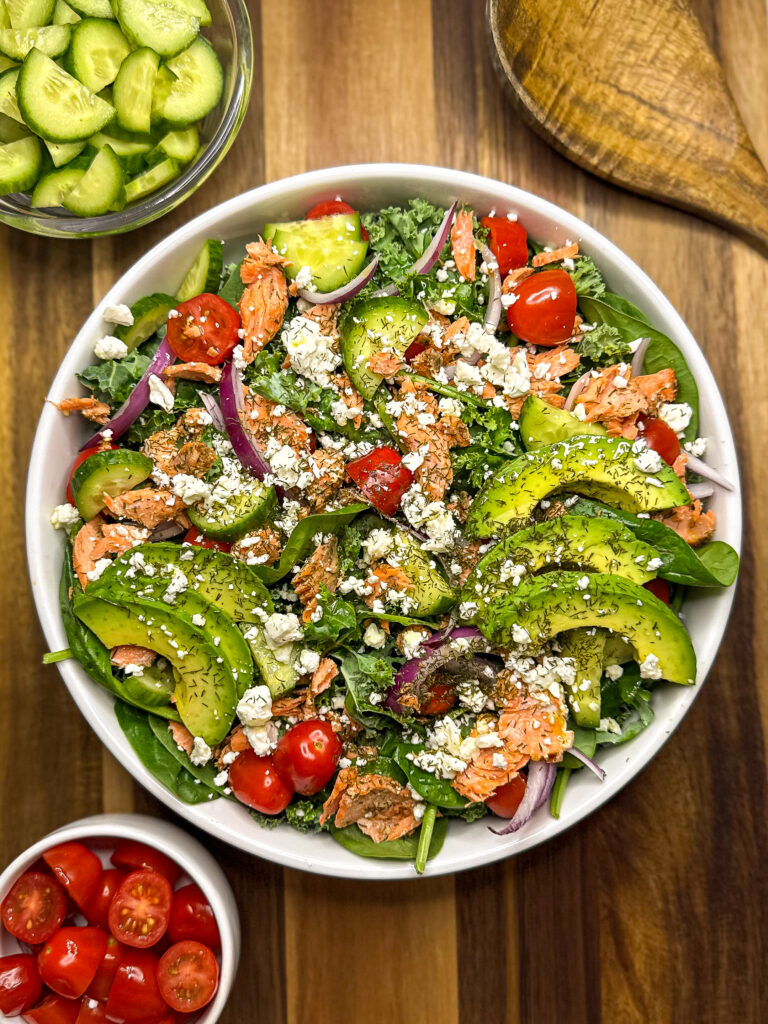
Mediterranean salmon salad with avocado and feta is a fresh, flavorful salad made with pan-seared salmon, leafy greens, crisp vegetables, creamy avocado, and tangy feta cheese. The salmon is seared in ghee with garlic powder, paprika, sea salt, and black pepper, then shredded and tossed throughout the salad with a simple lemon and olive oil dressing.
Every bite has a little bit of everything: tender, savory salmon, creamy avocado, juicy cherry tomatoes, crisp cucumber, and salty feta. Fresh lemon juice brightens the ingredients, while dried dill adds a light herbal flavor that ties the salad together. It’s a satisfying way to enjoy a variety of colorful vegetables alongside protein-rich salmon and nourishing fats.
Whether you’re looking for a healthy Mediterranean salmon salad, an easy salmon avocado salad for lunch, or a fresh dinner with feta cheese and a homemade lemon dressing, this recipe is simple to prepare and full of flavor. If you love fresh ingredients, heart-healthy fats, and a satisfying salad that doesn’t feel boring, this recipe is a must-try.
Why You’ll Love this Mediterranean Salmon Salad?
This Mediterranean Salmon Salad brings together fresh vegetables, flavorful fish, and a simple homemade dressing without requiring complicated ingredients or extra steps. It’s easy to customize, satisfying enough for a meal, and a great way to make a salad feel substantial.
- Packed with Flavor – Ghee-seared salmon, tangy feta, fresh lemon juice, and dried dill create a delicious balance of savory, creamy, bright, and herbaceous flavors.
- A Satisfying Source of Protein – Salmon provides high-quality protein that helps maintain muscles and supports normal body functions.
- Fresh, Colorful Vegetables – Kale, spinach, tomatoes, cucumber, and red onion add different textures along with fiber, vitamins, minerals, and plant compounds.
- Creamy Avocado and Feta – Avocado adds buttery richness, while feta brings a salty, tangy contrast that makes every bite more interesting.
- Simple Homemade Dressing – Olive oil and fresh lemon juice bring everything together without the need for a bottled dressing.
- Easy Lunch or Dinner – This salad works well as a fresh lunch or light dinner, especially when you want a meal that combines vegetables, protein, and healthy fats.
Easy to Customize – Adjust the lemon juice, olive oil, herbs, and seasonings to match your taste or use the vegetables you already have on hand.
What’s in this Mediterranean Salmon Salad?
This Mediterranean Salmon Salad uses simple, fresh ingredients that each contribute to its flavor, texture, and nutritional value. The combination of salmon, leafy greens, vegetables, avocado, and a bright lemon dressing makes it both colorful and satisfying.
- Wild-Caught Salmon – Wild-caught salmon is the main protein in this salad, adding a tender texture and rich, savory flavor once pan-seared and shredded. It provides high-quality protein and omega-3 fatty acids, which support normal brain function, heart health, and overall cell function.
- Ghee – Ghee helps the salmon develop a golden exterior while adding a rich, buttery flavor during pan-searing. It is primarily fat and contains fat-soluble compounds, but it is also high in saturated fat, so the amount used can be adjusted to your preference.
- Organic Kale – Organic kale adds hearty leafy greens and a slightly earthy flavor that holds up well alongside the warm salmon. It provides vitamins K, A, and C, as well as fiber and plant compounds that support normal immune function, bone health, and digestive health.
- Organic Spinach – Organic spinach balances kale with tender leaves and a mild flavor that works well with the dressing. It provides folate, vitamin K, and carotenoids, which contribute to normal cell function, bone health, and eye health.
- Organic Cherry Tomatoes – Organic cherry tomatoes bring juicy sweetness and a little acidity to the salad. They provide vitamin C, potassium, and lycopene, a plant compound with antioxidant activity that helps protect cells from oxidative damage.
- Organic Cucumber – Organic cucumber adds a crisp, refreshing texture that balances the richness of the salmon, avocado, and feta. Its high water content contributes to hydration, while the peel provides a small amount of fiber and other plant nutrients.
- Organic Red Onion – Organic red onion adds a sharp, slightly sweet flavor that gives the salad more depth. It contains fiber and plant compounds, including quercetin, that have antioxidant activity.
- Feta Cheese – Feta cheese contributes a tangy, salty flavor that complements the salmon and fresh vegetables. It provides protein and calcium, which support tissue maintenance and healthy bones, although it can also be relatively high in sodium.
- Organic Avocado – Organic avocado adds a creamy texture and balances the crisp vegetables with its mild, buttery flavor. It provides monounsaturated fats, fiber, and potassium, which support heart health, digestive function, and normal muscle function.
- Dried Dill – Dried dill adds a delicate herbal flavor that pairs naturally with salmon, lemon, and feta. Although the amount used is small, herbs can add flavor without requiring additional salt or heavier dressings.
- Extra-Virgin Olive Oil – Extra-virgin olive oil forms the base of the simple salad dressing and adds a smooth, fruity flavor. It is rich in monounsaturated fats and contains polyphenols, plant compounds that contribute antioxidant activity and fit well into a Mediterranean-style eating pattern.
- Fresh Organic Lemon Juice – Fresh organic lemon juice brightens the salad and balances the richness of the salmon, ghee, avocado, and feta. It provides vitamin C, which supports collagen formation, normal immune function, and iron absorption.
- Sea Salt – Sea salt enhances the natural flavor of the salmon and vegetables and helps bring the other seasonings together. It provides sodium, an electrolyte needed for fluid balance and nerve and muscle function, but too much sodium can contribute to high blood pressure in some people.
- Black Pepper – Black pepper adds gentle heat and brings out the savory flavors of the salmon. It contains piperine and other plant compounds, although the small amount used primarily contributes seasoning rather than a significant nutritional benefit.
- Garlic Powder – Garlic powder gives the salmon a savory, aromatic flavor that complements the paprika and black pepper. It allows you to add garlic flavor evenly without chopping fresh garlic, and it contains small amounts of naturally occurring plant compounds.
- Paprika – Paprika adds mild warmth, color, and a subtle pepper flavor to the salmon. It contains carotenoid pigments with antioxidant activity, though the amount used as seasoning contributes only a small amount nutritionally.
Note: I use some organic ingredients, but it’s not required. You can learn more about organic produce and pesticide levels here. Feel free to use what works best for you!
Health Benefits of this Mediterranean Salmon Salad
This Mediterranean Salmon Salad combines fish, leafy greens, vegetables, avocado, and olive oil to provide a range of nutrients in one meal. Its benefits come from the ingredients working together as part of an overall balanced eating pattern.
- Supports Heart Health – Salmon provides omega-3 fatty acids, while avocado and olive oil contribute predominantly unsaturated fats. Replacing some saturated fats with unsaturated fats can support healthy cholesterol levels as part of a balanced diet.
- Provides High-Quality Protein – Salmon supplies all nine essential amino acids needed to build and maintain body proteins. Protein supports muscle maintenance, tissue repair, and the production of enzymes and other important compounds.
- Supports Brain and Nervous System Function – Salmon contains omega-3 fatty acids, including DHA, which is an important structural component of the brain. Salmon also provides vitamin B12, which helps maintain normal nerve function and supports red blood cell formation.
- Contributes to Healthy Digestion – Kale, spinach, tomatoes, cucumber, red onion, and avocado provide dietary fiber in varying amounts. Fiber helps support regular bowel movements and nourishes beneficial gut bacteria.
- Supports Immune Function – Leafy greens, tomatoes, and lemon juice provide vitamins and other nutrients involved in normal immune function. Salmon also contributes vitamin D and selenium, which support several processes in the body, including immune function.
- Supports Bone Health – Kale and spinach provide vitamin K, while feta contributes calcium and salmon can provide vitamin D. These nutrients play different roles in maintaining healthy bones, though overall bone health also depends on adequate nutrition and regular physical activity.
- Provides Antioxidant Plant Compounds – Tomatoes, leafy greens, red onion, herbs, and olive oil contain various plant compounds with antioxidant activity. These compounds help protect cells from oxidative damage as part of the body’s normal defense systems.
- Helps Make Meals Satisfying – The combination of protein from salmon, fats from avocado and olive oil, and fiber from vegetables can help make this salad more satisfying than a bowl of greens alone. Including a variety of these nutrients can help support fullness between meals.
Serving Suggestions
This Mediterranean Salmon Salad is delicious on its own, but you can pair it with a few simple sides if you’d like a more substantial meal. Choose something that complements the lemony dressing and fresh Mediterranean-inspired flavors.
- Warm Crusty Bread – Serve with a slice of crusty bread to soak up the lemon and olive oil dressing. Whole-grain bread adds extra fiber, while sourdough offers a slightly tangy contrast.
- Roasted Potatoes – Crispy roasted potatoes make a hearty side that pairs well with the savory salmon and creamy feta. Potatoes provide carbohydrates and potassium, making the meal more filling.
- Quinoa – Serve the salad over cooked quinoa or alongside a small bowl of it for extra substance. Quinoa provides carbohydrates, fiber, and plant-based protein.
- Hummus and Fresh Vegetables – A small serving of hummus with carrots or bell pepper slices complements the Mediterranean flavors. Chickpeas provide fiber and plant-based protein, adding more variety to the meal.
- Lemon Herb Rice – A side of rice with lemon and fresh herbs works well when you want a simple, comforting addition. It provides carbohydrates to round out the meal without overpowering the salad.
- A Simple Fruit Bowl – Finish with fresh berries, orange slices, or melon for a refreshing contrast. Fruit adds natural sweetness, fiber, and a variety of vitamins depending on what you choose.
Storage Tips
This Mediterranean Salmon Salad tastes best freshly assembled, especially because avocado can brown and leafy greens can soften once dressed. If you’re preparing it ahead, store the components separately whenever possible.
- Refrigeration: Store cooked salmon in an airtight container in the refrigerator at 40°F (4°C) or below and use it within 3–4 days of cooking. Keep the undressed vegetables and dressing separate, and cut the avocado just before serving for the best color and texture.
- Freezing: Freezing the assembled salad is not recommended because the greens, cucumber, tomatoes, and avocado can become watery or mushy after thawing. Cooked salmon can be frozen separately in an airtight, freezer-safe container, although its texture may change slightly.
- Reheating: If you prefer warm salmon in your salad, reheat only the salmon gently until it reaches 165°F (74°C), then let it cool slightly before adding it to the greens. The salad itself should not be reheated, and you can also enjoy the cooked salmon cold straight from the refrigerator.
Ingredient Substitutions & Variations
This Mediterranean Salmon Salad is easy to adjust based on your preferences and what you have available. Keep the salmon, fresh vegetables, and bright dressing as the foundation, then customize the rest to your taste.
- Salmon: Use another wild-caught fish, such as trout, if you want a similar rich flavor and tender texture. Cooking time will depend on the thickness and type of fish.
- Ghee: Use extra-virgin olive oil or avocado oil for pan-searing if you prefer. The flavor and browning may differ slightly depending on the oil.
- Kale and Spinach: Use organic arugula, romaine, or mixed salad greens instead. Arugula adds a peppery flavor, while romaine provides a crisp texture.
- Feta Cheese: Try crumbled goat cheese for a creamy, tangy alternative. You can also omit the cheese or use a suitable dairy-free alternative if needed.
- Avocado: If you don’t have avocado, add extra cucumber or a few olives for a different texture and flavor. The salad will have less of the creamy texture and monounsaturated fat that avocado provides.
- Dried Dill: Substitute fresh dill, using a little more to taste because fresh herbs are generally milder by volume. Fresh parsley is another option, although it has a different flavor.
- Lemon and Olive Oil Dressing: Add a little Dijon mustard for extra tang and to help the dressing emulsify. Whisk it together with the lemon juice and olive oil before drizzling over the salad.
- Extra Vegetables: Add organic bell pepper, artichoke hearts, or olives for more Mediterranean-inspired flavor. Choose additions that complement the salmon without making the salad too crowded.
- Make It More Filling: Add cooked quinoa, chickpeas, or roasted potatoes to turn the salad into a heartier meal. These additions provide carbohydrates and, depending on the ingredient, extra fiber or plant-based protein.
Common Mistakes to Avoid
A few simple techniques help keep the salmon tender, the vegetables crisp, and the dressing balanced.
- Not Drying the Salmon: Wet salmon is less likely to develop a golden exterior when seared. Pat it dry with paper towels before seasoning and adding it to the hot skillet.
- Using a Pan That Isn’t Hot Enough: Adding salmon to a skillet that hasn’t heated properly can cause it to cook unevenly and stick. Warm the ghee over medium heat before adding the fish, but lower the heat if the ghee begins to smoke.
- Overcooking the Salmon: Salmon can become dry if it stays in the pan too long. Cook according to the thickness of the fillet and check that the center reaches 145°F (63°C) for the standard food-safety recommendation.
- Shredding the Salmon Too Early: Letting the salmon rest briefly after cooking helps the juices settle and makes it easier to handle. Shred it into bite-sized pieces just before assembling the salad.
- Dressing the Salad Too Far in Advance: Lemon juice and olive oil can cause leafy greens to soften if they sit too long. Dress the Mediterranean Salmon Salad shortly before serving to preserve its fresh texture.
- Adding Avocado Too Early: Cut avocado can brown and soften as it sits exposed to air. Slice it just before serving and toss it gently with the other ingredients.
- Using Too Much Salt: Feta is already salty, so adding too much sea salt can overpower the salad. Season the salmon before cooking, then taste the assembled salad before adding more salt.
- Adding Too Much Lemon or Oil: Too much dressing can overwhelm the fresh vegetables and make the salad heavy. Start with a small drizzle of each, toss, and add more gradually until everything is lightly coated.
- Tossing Too Roughly: Aggressive tossing can break apart the avocado and salmon. Use salad servers or two large spoons to gently distribute the ingredients while keeping some of their texture.
Frequently Asked Questions (FAQ)
Here are answers to common questions about cooking the salmon, preparing the salad ahead, and customizing the ingredients.
Can I use leftover cooked salmon?
Yes! Leftover cooked salmon works well in this salad and makes preparation even quicker. Make sure it has been stored safely in the refrigerator, then flake it into bite-sized pieces before adding it to the greens.
Can I eat the salmon salad cold?
Absolutely. You can serve the salmon freshly cooked and slightly cooled or use refrigerated cooked salmon for a completely cold salad. Both options work well with the lemon, olive oil, dill, and feta.
How do I know when the salmon is cooked?
The standard food-safety recommendation is to cook fish to an internal temperature of 145°F (63°C), measured at its thickest point. The flesh should appear opaque and separate easily with a fork.
Can I meal prep this Mediterranean salmon salad?
Yes, but it’s best to prepare the components separately. Cook and refrigerate the salmon, wash and dry the greens, chop the sturdy vegetables, and mix the dressing ahead of time, then add the avocado and dressing shortly before serving.
What dressing goes best with Mediterranean Salmon Salad?
A simple mixture of extra-virgin olive oil and fresh lemon juice works beautifully with salmon, avocado, and feta. Dried dill, black pepper, and a small amount of sea salt add flavor without needing a complicated dressing.
Is this salmon salad keto-friendly?
It can fit into some lower-carbohydrate eating patterns because salmon, leafy greens, avocado, feta, and olive oil are relatively low in carbohydrates. The exact carbohydrate content depends on the portions and ingredients used, so calculate the nutrition information for your specific serving if you’re following a strict plan.
Can I make this salad dairy-free?
Yes. Leave out the feta or use a dairy-free alternative that suits your preferences. The salad will still have plenty of flavor from the salmon, lemon juice, olive oil, vegetables, and herbs.
What can I use instead of kale?
Organic arugula, romaine, or mixed greens all work well. Choose arugula for a peppery bite or romaine if you prefer a milder flavor and a crisp texture.
Can I use bottled lemon juice?
You can, but fresh lemon juice generally provides a brighter flavor. If using bottled juice, start with a small amount and adjust to taste.
How can I keep avocado from browning?
Cut the avocado just before serving and toss it gently with a little lemon juice. This helps slow browning, although it won’t prevent it completely if the salad sits for a long time.
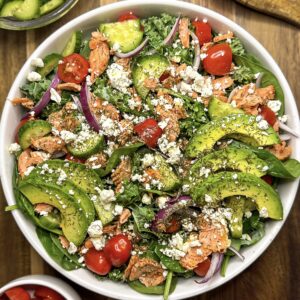
Mediterranean Salmon Salad with Avocado and Feta
Ingredients
- 2 wild-caught salmon fillets about 4–6 ounces each
- 1–2 tsp ghee as needed for pan-searing
- 2 cups organic kale chopped
- 2 cups organic spinach
- 1 cup organic cherry tomatoes halved
- 1 organic cucumber sliced or chopped
- ¼ small organic red onion thinly sliced
- ¼–⅓ cup crumbled feta cheese to taste
- 1 organic avocado sliced
- ½ teaspoon dried dill or to taste
- 1–2 tablespoons extra-virgin olive oil to taste
- 1–2 tablespoons fresh organic lemon juice to taste
- Sea salt to taste
- Black pepper to taste
- Garlic powder to taste
- Paprika to taste
Instructions
- Pat the salmon dry with paper towels. Season both sides with sea salt, black pepper, garlic powder, and paprika.
- Heat the ghee in a skillet over medium heat. Add the salmon and cook until golden on the outside and cooked through, adjusting the time according to the thickness of the fillets. For food safety, cook to an internal temperature of 145°F (63°C).
- Transfer the cooked salmon to a plate and let it rest briefly. Use a fork to shred it into bite-sized pieces, removing any bones you find.
- Add the chopped kale and spinach to a large salad bowl. Halve the cherry tomatoes, slice or chop the cucumber, thinly slice the red onion, and slice the avocado.
- Add the cherry tomatoes, cucumber, red onion, avocado, and crumbled feta to the bowl with the greens. Distribute the ingredients evenly so every serving gets a good mix.
- Scatter the shredded salmon throughout the salad. Let it cool slightly before adding if you prefer the greens to stay completely crisp.
- Sprinkle the salad with dried dill, then drizzle with olive oil and fresh lemon juice. Season with additional sea salt and black pepper to taste, remembering that feta already adds saltiness.
- Gently toss the salad to distribute the ingredients and dressing without crushing the avocado or salmon. Serve immediately for the freshest texture and flavor.
Notes
- Calories: 500–650
- Protein: 35–45 g
- Carbohydrates: 20–30 g
- Fat: 32–45 g
- Fiber: 8–12 g
- Sugar: 5–9 g
- Saturated Fat: 7–12 g
- Sodium: Varies significantly with the feta and added salt